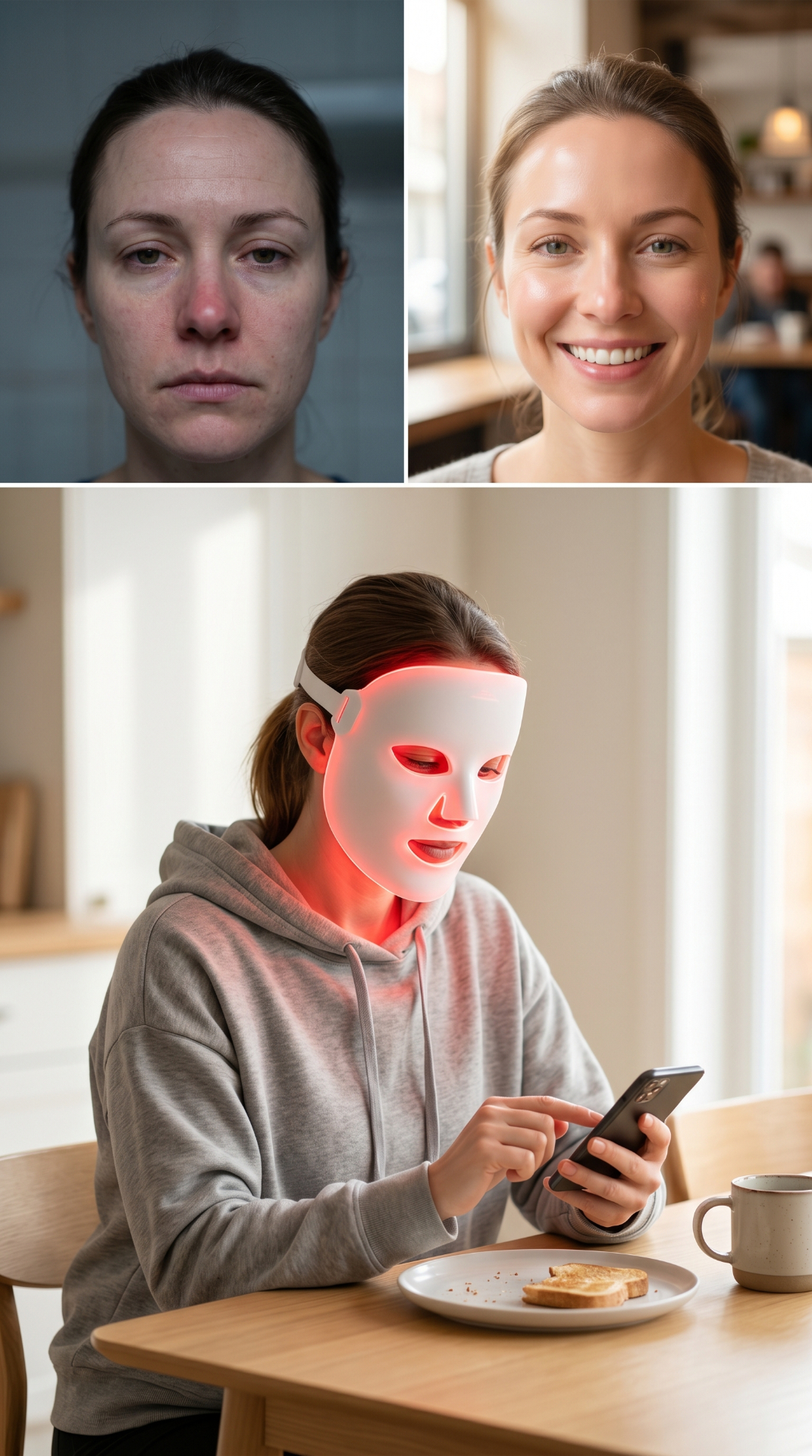
The Technical Breakdown: What Actually Separates a Clinical Mask From a Toy
The at-home LED market is flooded with $40 masks that produce essentially zero therapeutic effect and $1,800 systems that deliver med-spa results. The difference isn't price — it's three specifications most brands deliberately obscure: wavelength precision, delivered irradiance, and treatment evenness.
Wavelength Precision: Why ±5nm Matters
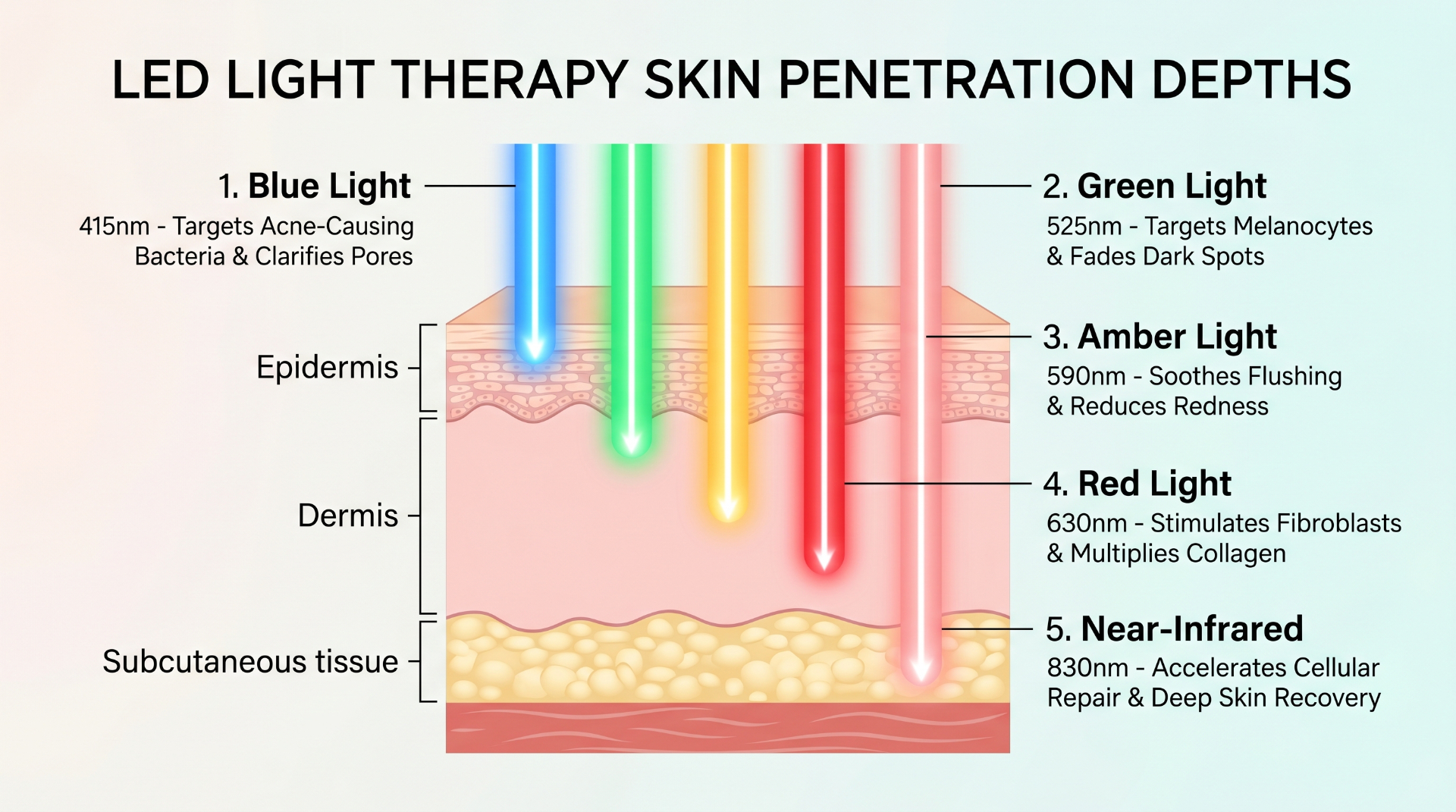
The dermatological literature is unambiguous: 630nm and 660nm red light, paired with 830nm and 850nm near-infrared, are the wavelengths with the strongest published evidence for collagen synthesis and dermal remodeling. Cheap masks often ship LEDs that drift by 20–40nm, pushing them outside the therapeutic window entirely. The masks we selected use binned diodes held within ±5nm of their stated bands — the same tolerance dermatology clinics demand.
Irradiance: The Number That Actually Predicts Results
Irradiance — the optical power delivered per square centimeter at the skin's surface — is the single most predictive metric for therapeutic outcome. Clinical protocols use 30–100 mW/cm². A mask with 200 dim diodes can deliver less dose than a mask with 100 properly driven LEDs. Always demand third-party irradiance verification; if the brand won't publish it, assume it's below clinical threshold.
Treatment Evenness: Why Flexible Silicone Wins
A rigid plastic mask sits millimeters off the cheekbones, jawline, and forehead — and irradiance falls off with the square of distance. A flexible medical-grade silicone mask molds to your face, keeping every diode within optimal range. This is why the CurrentBody and INIA silicone models dominate clinical reviews while rigid panels disappoint.
Eye Safety Architecture
Red and near-infrared light is biologically active, which means eye protection isn't optional. Every device we featured uses opaque, integrated eye shielding or contoured occluders that physically block direct retinal exposure. Combined with non-coherent LED emission (versus laser), the safety margin is wide — but never look directly into an unmasked LED array.
The Protocol That Actually Works
Three to five sessions per week. Ten to twenty minutes per session. Clean, dry skin or water-based serum applied first. Retinol and vitamin C applied after — never before. Expect glow and hydration improvements in 2–3 weeks, visible wrinkle reduction at 8–12 weeks, and continued dermal remodeling for up to 6 months. Compliance is the single biggest predictor of outcome — which is why we weighted wireless and lightweight designs heavily.
Microcurrent + Photobiomodulation: The Power Combo
The INIA microcurrent device demonstrates an emerging trend: stacking modalities. Microcurrent re-educates underlying facial musculature (think a workout for your face), while red and NIR light remodels the overlying dermis. The result is a lifted, tighter, denser complexion that neither modality achieves alone.
Multi-Spectrum Masks: When 8 Colors Beats 2
If your concerns extend beyond aging — adult acne, rosacea redness, melasma — a multi-color device like the GYH 8-color array becomes powerful. Blue (415nm) destroys acne bacteria. Yellow (590nm) calms vascular redness. Green (520nm) targets pigmentation. Combined with red and NIR, you have a multi-condition treatment platform that no single-wavelength device can match.